Writing
Articles & Notes
-
Artemis III Is Building the Bridge Back to the Moon.
The return to the Moon is becoming a program of connected steps: test the crew spacecraft, practice working with landers, build infrastructure in lunar orbit and on the surface, then repeat the journey.
-
Pacific Fusion’s $1 Billion Albuquerque Campus and What It Means for AI Datacenters
The question every AI infrastructure planner is asking is where the next several gigawatts will come from, and when they will arrive.
-
Is the D270 a Niche Disruptor or a Marginal Threat to Nvidia’s Inference Dominance?
Intel’s D270 is the first data-center GPU the company has put forward for inference since it cancelled Rialto Bridge in 2023 and Falcon Shores in 2025.
-
The Monoculture Trap: From Waterloo and Santa Clara to the Brink of the AI Era
RIM's Slough NOC collapse and Intel's Raptor Lake crisis are the same failure mode: structural rigidity and vendor lock-in. The AI industry is building the exact same single points of failure right now.
-
Beyond the Doomer Narrative: Why the Future of AI Looks More Like Star Wars Than Terminator
Asimov's benevolent Machines and Star Wars' droid partners are the better model for where AI is actually headed — decoupling scarcity from conflict, one off-world resource at a time.
-
Confidential Computing: The Locked Room Inside a Building You Don’t Own
Data is encrypted at rest and in transit, but historically exposed the moment it's processed. How hardware-isolated enclaves are becoming central to AI infrastructure, from Apple's Private Cloud Compute to confidential GPUs on Azure.
-
Quantum 101 · Part 5/5
Bell States: Inside the Entanglement Einstein Called “Spooky”
The four Bell states, the 2022 Nobel Prize that proved Einstein wrong to doubt them, and why metropolitan quantum networks are already being tested in real fiber today.
-
Quantum 101 · Part 4/5
Quantum Circuits: How Gates Become Algorithms
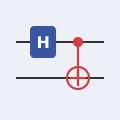
How CNOT, SWAP, and Toffoli extend single-qubit gates into real algorithms, worked through the smallest circuit that builds an entangled Bell state.
-
Quantum 101 · Part 3/5
The Pauli Gates: X, Y, Z, and the Building Blocks of Quantum Error Correction
X, Y, and Z look like a simple bit-flip and phase-flip. They're also the exact operators behind 2026's below-threshold quantum error correction milestones.
-
Quantum 101 · Part 2/5
The Hadamard Gate: The Single Instruction That Makes Quantum Computers Quantum
Why one 2×2 matrix that moves a qubit from a pole to the equator of the Bloch sphere opens the door to nearly every quantum algorithm worth running.
-
Quantum 101 · Part 1/5
Inside a Qubit: State Vectors, Amplitudes, and the Math Beneath Quantum Computing
What alpha and beta actually mean in a qubit's state vector, and why squaring them — not the numbers themselves — is where classical intuition breaks.
-
The $15 AI Coding Agent: Running an Autonomous LLM Workflow on a Microcontroller
Pairing real Linux on an ESP32-S3, WebAssembly sandboxing, and a minimalist coding agent turns a sub-$20 chip into a self-contained, physically isolated agent appliance.
-
Harnessing Idle Silicon: How NVIDIA PAIR Turns Your Home Network Into an AI Cluster
NVIDIA's open-source Personal AI Router turns every underused GPU on your LAN into a shared inference pool — here's how it actually works and how to set it up.
-
Quantum Computing Will Break Half of Encryption — Here's Which Half
Quantum computers won't hit every lock the same way: symmetric ciphers just need a longer key, but public-key cryptography needs to be replaced outright.