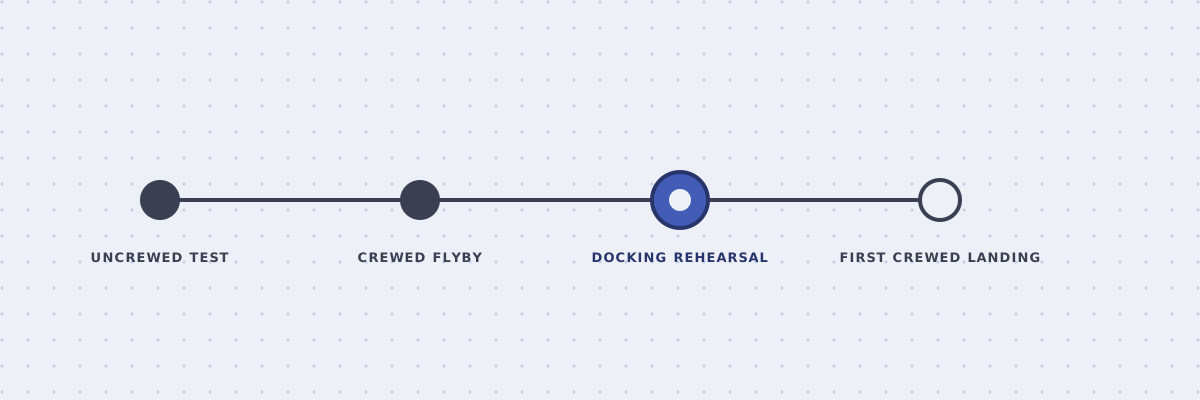
The return to the Moon is becoming a program of connected steps: test the crew spacecraft, practice working with landers, build infrastructure in lunar orbit and on the surface, then repeat the journey. Artemis III has a pivotal role in that sequence. Its Earth-orbit rehearsal is designed to bring astronauts, Orion and commercial landers together before the first planned crewed landing of this new campaign.
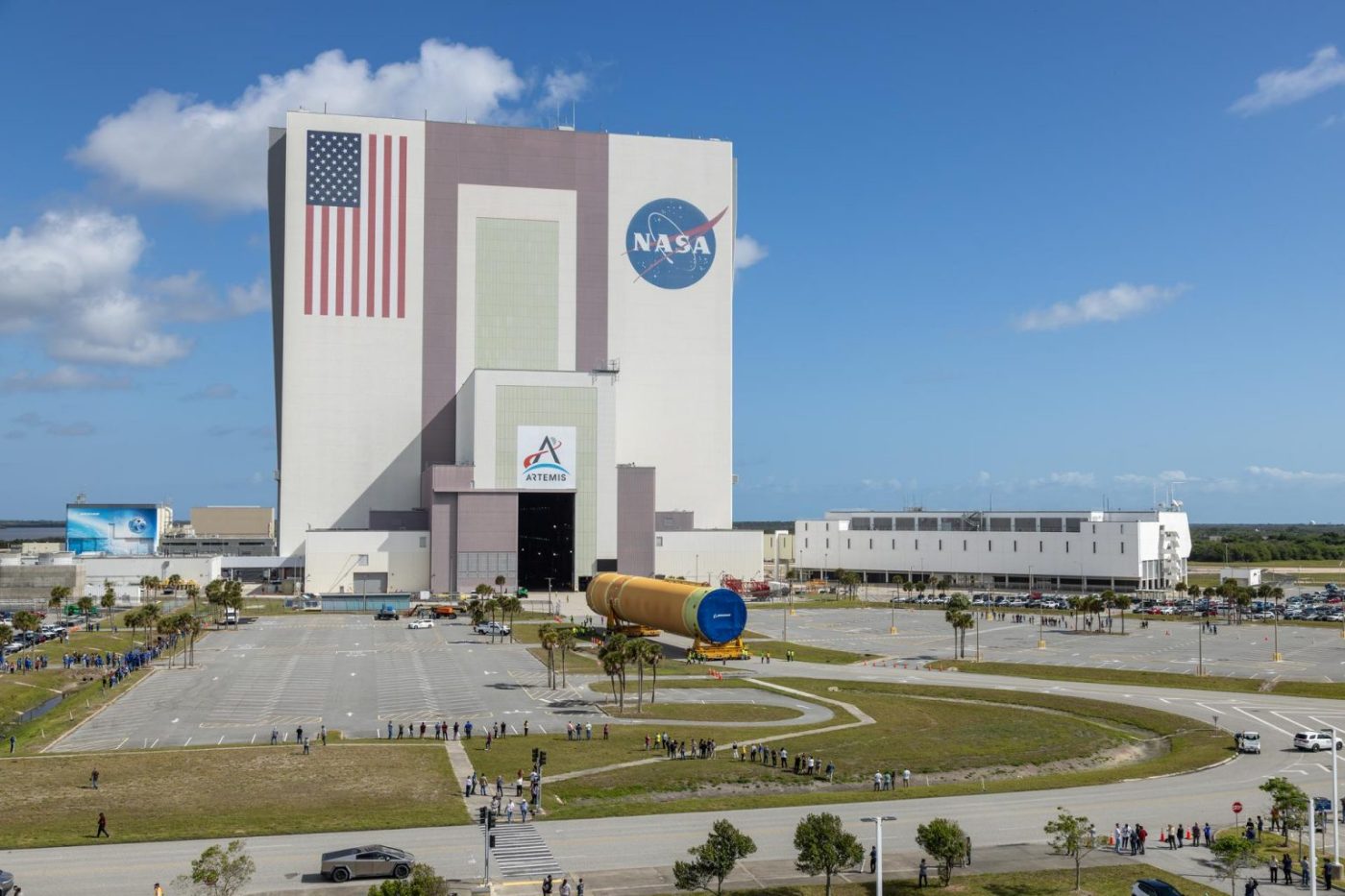
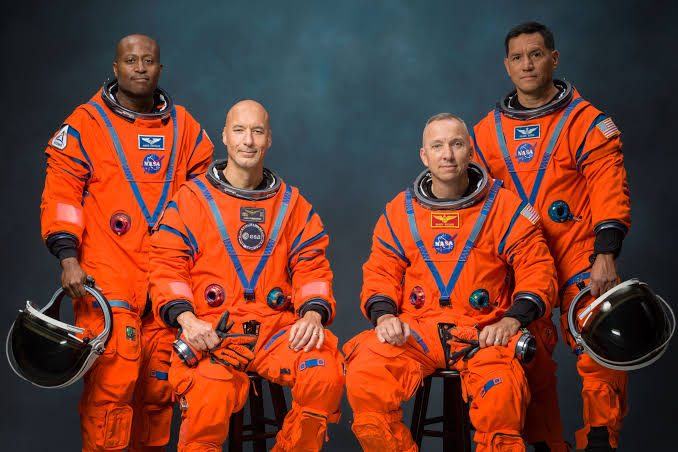
NASA’s February 2026 architecture update set Artemis IV as the first crewed landing mission, targeted for 2028, and reshaped Artemis III as a low Earth orbit mission. Four astronauts will fly in Orion aboard the Space Launch System, then rendezvous and dock with one or both commercial Human Landing Systems. NASA also standardized SLS on Block 1 and canceled the Exploration Upper Stage, concentrating the near-term plan on the vehicles and interfaces that lead directly toward the landing.
Artemis II has already carried the program around the Moon and home again. Its four-person crew splashed down on April 10, 2026, after a lunar flyby, NASA reported. Artemis III is targeted for 2027. Each mission builds on the one before it: Artemis I tested SLS and Orion without a crew; Artemis II demonstrated a crewed lunar journey; Artemis III is planned to exercise rendezvous, docking and crew procedures with lander hardware in Earth orbit; Artemis IV is the current target for the first crewed landing. NASA’s Artemis program overview lists Artemis V as another lunar surface mission, targeted for 2028.
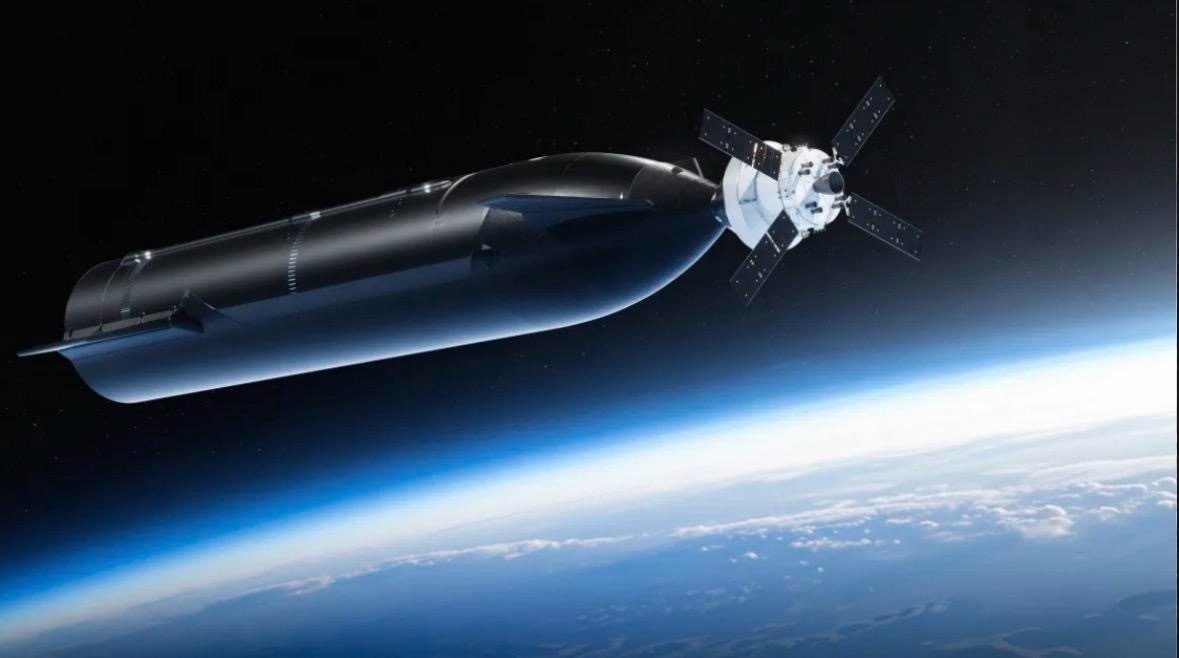
The planned Artemis III sequence turns an orbital rendezvous into a practical rehearsal. A July 2026 account of NASA’s test plan says Orion would first dock with Blue Origin’s Blue Moon test lander, with up to two crew members entering its cabin. Later, Orion would dock nose-to-nose with a SpaceX Starship test vehicle. The crew would remain aboard Orion during that Starship interaction; the test vehicle described in the account would not have a crew cabin or life-support system. These exercises can provide flight experience with approach, docking and crew-transfer operations—valuable steps toward integrating landers with the spacecraft that carries astronauts from Earth.
The test is meaningful because a lunar landing brings many systems together. Orion and a lander need to find one another, close safely, connect and support the crew’s work across their interface. Artemis III will let NASA and its partners exercise those operations in the comparatively accessible environment of Earth orbit. A successful rehearsal would provide evidence about compatibility and procedures, while later missions build on it with the lunar descent, surface operations, ascent and return. The sequence turns a complex challenge into a series of concrete engineering milestones.
The campaign is much larger than two lander companies. SLS and Orion provide the crew’s route from Earth: Boeing and Northrop Grumman are among SLS contractors, Lockheed Martin leads Orion, and Europe’s Airbus-built European Service Module provides Orion’s propulsion, power and life-support resources. Beyond Earth orbit, the planned Gateway outpost will add a place for crews to live and work in lunar orbit. ESA is contributing habitat and logistics modules; Canada is providing the Canadarm3 robotic system; the United Arab Emirates is contributing Gateway’s crew-and-science airlock; and Japan is contributing batteries and life-support systems for Gateway modules. These international contributions make the lunar campaign a shared engineering effort, joining transport, habitation, robotics and logistics. NASA’s partner overview describes the roles.
On the surface, astronauts will need ways to move, work and stay connected. Axiom Space is developing NASA’s Artemis lunar spacesuit. NASA selected three companies—Intuitive Machines, Lunar Outpost and Venturi Astrolab—to advance lunar terrain vehicles for future surface work. Japan’s space agency JAXA, working with Toyota, is developing a pressurized rover intended to let astronauts travel inside without spacesuits. NASA’s Commercial Lunar Payload Services program pays commercial providers to deliver science and technology payloads. Intuitive Machines is also among the companies developing lunar relay satellites for LunaNet, NASA’s planned framework for lunar communications and navigation. Together, spacesuits, rovers, payload delivery and communications are pieces of a more capable exploration system. NASA outlines its Moon-to-Mars systems, spacesuit program, LunaNet and lunar mobility partners.
This is how the idea of a sustained human presence gains practical shape: through linked capabilities and repeated operations. NASA’s current Artemis schedule is about exploration missions and the infrastructure that can support them; a permanent, self-sufficient lunar colony remains a larger vision. The systems now in development—crew transport, landers, suits, rovers, orbital habitation, communications and cargo delivery—are meaningful steps toward longer stays and more ambitious work on and around the Moon.
SpaceX’s Starship Human Landing System illustrates the scale of the engineering challenge and opportunity. NASA’s Artemis III mission description says SpaceX plans to place a storage depot in Earth orbit and use reusable tankers to deliver propellant before the HLS departs for the Moon. NASA’s Inspector General review of the HLS contracts describes a propellant-aggregation campaign involving more than ten tanker flights. Rendezvous, storage and transfer are central parts of this architecture. Artemis III’s Orion docking rehearsal will exercise a different interface in the same broad system: connecting crew spacecraft and lander hardware.
Blue Origin is developing another route to the lunar surface. NASA reported that its uncrewed Blue Moon Mark 1 lander completed thermal-vacuum environmental testing at Johnson Space Center in May 2026. The milestone shows the cargo lander progressing through a demanding simulated environment as the company advances it toward flight; the crewed Mark 2 lander has its own development path. Blue Origin’s New Glenn rocket also experienced an explosion during a static-fire test at Cape Canaveral on May 28, 2026, according to Associated Press reporting carried by PBS News. That was a test incident, not an operational launch. Both milestones are part of the work of developing and testing the vehicles that could support future lunar missions.
The two commercial lander architectures solve different parts of the mission in different ways. Starship HLS depends on an orbital propellant campaign; Blue Moon Mark 1’s milestone was environmental testing of an uncrewed cargo vehicle. Read in context, each is evidence about a particular capability, and Artemis III can add another kind of evidence by testing how Orion and lander hardware operate together. If both providers take part as described in NASA’s test-plan account, the rehearsal can inform integration work across two different designs.
The wider Artemis vision reaches beyond the first landing. Artemis IV and V are planned lunar surface missions; Gateway is designed as a foothold in lunar orbit; international partners are contributing habitat, robotics, airlock and life-support systems; commercial providers are developing suits, rovers, landers and delivery services. These are connected projects in an emerging architecture for returning people to the Moon, enabling more capable exploration and learning how to sustain activity there over time.
Artemis III’s importance lies in the connection it creates between a successful crewed flyby and the planned return to the surface. It gives the program a dedicated opportunity to practice how Orion and commercial landers work as parts of one system. Every rendezvous, environmental test, rover, spacesuit, relay and habitat adds practical knowledge to the next step. The Moon is becoming more than a destination on a mission patch: it is the setting for a growing network of technologies, partners and repeated human exploration.